
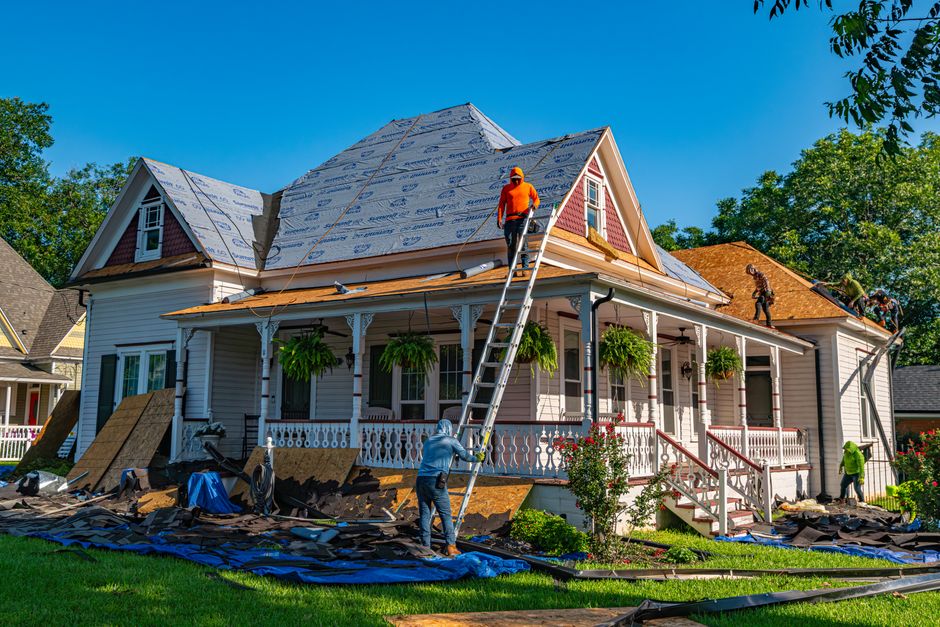
Asbestos in Roofing Felt and Underlayment
Roofing felt installed before the mid-1980s may contain asbestos. How to spot suspect underlayment by build date and visual cues, and how to confirm it.
Last updated:
Roofing felt installed before the mid-1980s should be treated as asbestos-containing until a lab proves otherwise. Asbestos was added to felt underlayment for decades to give it fire resistance and tensile strength, and you cannot tell a contaminated sheet from a clean one by looking at it. The fibers only become dangerous when the material is cut, torn, or ripped up during a re-roof or a renovation, which is exactly when most homeowners first notice the old black paper underneath.
Roofing felt, also called tar paper or underlayment, is the dark layer that sits between the roof deck and the shingles, and sometimes between a subfloor and finished flooring. Manufacturers blended asbestos into many of these felts from the 1940s into the 1980s. Below is how to narrow down whether yours is a suspect, and the one step that actually settles it.
How to identify asbestos in roofing felt
You identify asbestos roofing felt in two stages. First you decide whether the material is plausible based on its age and where it sits. Then you confirm it with a lab, because no visual cue is reliable on its own.
Visual signs that put a felt on the suspect list:
- A dark grey, black, or white-flecked surface with a slightly fibrous or matted texture rather than a smooth, modern synthetic feel
- Heavy, dense sheets that feel more like thick cardboard than the light plastic-coated felt sold today
- Brittle, crumbling edges, especially on material that has been in place for decades
- Location under old asphalt shingles, in built-up flat roofs, or layered beneath original flooring in a pre-1980s home
None of these signs are proof. Modern non-asbestos felt can look almost identical, and some asbestos felts were coated so they pass for ordinary tar paper. Treat the visual check as a way to rule material in, never to rule it out.
Roofing felt asbestos by build date
Build date is the strongest first filter, because it tracks when manufacturers actually used asbestos in felt.
- Built before 1980: Treat any original roofing felt or underlayment as asbestos-containing until tested. This is the highest-risk window.
- Built 1980 to 1989: Asbestos use was declining but had not stopped. Suspect material is still common, so testing is warranted before you disturb it.
- Built 1990 or later: Asbestos felt is unlikely in new construction from this period, but a re-roof can leave an older asbestos layer buried under newer shingles, so check the bottom layer.
The age of the roof layer matters more than the age of the house. Homes are re-roofed every 20 to 30 years, so a 1965 house can hold several stacked generations of felt, with the oldest and most suspect sheet sitting directly on the deck.
Why you cannot confirm asbestos felt by sight
There is no color, smell, or texture that confirms asbestos. The fibers are microscopic, and the only way to know is laboratory analysis of a small sample. This matters because guessing wrong in either direction is costly: assume it is clean and you can release fibers during a tear-off, or assume it is asbestos and you can pay for abatement you never needed.
Disturbing suspect felt is also the moment it becomes hazardous. Professionals who cut asbestos roofing felt are required to control the dust at the source. Under federal rules, when a built-up roof with asbestos-containing felt is cut with a power roof cutter, all dust from the cutting must be captured by a HEPA dust collector or HEPA-vacuumed along the cut line. If trained crews take that precaution, scraping or sawing the same material in a closed attic without protection is not a reasonable risk to take.
How to confirm it: test kit vs professional inspection
For a single material like a square of roofing felt, a mail-in test kit is the cheapest way to get a definitive answer. You collect a small sample, seal it, and send it to an accredited lab that analyzes it by polarized light microscopy. A standard kit and analysis usually runs about 25 to 50 dollars per sample. See our guide to asbestos test kits for which kits use properly accredited labs.
A few practical points when you sample roofing felt yourself:
- Lightly mist the spot with water first to keep fibers down, and cut a small piece rather than snapping it dry.
- Bag each sample separately. To avoid cross-contamination, labs advise that bulk samples always be shipped in separate mailing containers.
- Wear a fitted respirator and disposable gloves, and wipe up any debris while it is still damp.
Choose a professional inspection instead when the felt is widespread, badly deteriorated, or you are planning a full re-roof. An inspector can map every suspect layer and is the right call before any large job. Removal itself is regulated: the EPA's Asbestos NESHAP governs how asbestos-containing roofing material is taken off and disposed of, and larger projects must follow it.
What to do next: if your roofing felt predates 1990, do not sand, cut, or tear it until you know. Start with our roofing felt material page to match what you are seeing, then test it before you disturb it. A 30 dollar sample is far cheaper than an unplanned abatement or an exposure you cannot undo.
Common questions
Is all old roofing felt asbestos? No. Plenty of pre-1980 felt is asbestos-free, but you cannot tell which is which without testing, so the safe assumption for older material is that it could contain asbestos until a lab confirms otherwise.
Is asbestos roofing felt dangerous if I leave it alone? Intact felt that stays sealed under shingles or flooring releases very few fibers. The risk rises sharply when the material is cut, torn, or removed, which is why identification matters most right before a renovation or re-roof.
Can I just remove a small patch myself? A tiny, clearly intact sample for testing is reasonable with proper precautions, but removing a larger area of confirmed asbestos felt should follow professional and regulatory handling rather than a weekend tear-off.